


Marketing claims: their importance in building the brand bmage of a company, product, or service
Claims and statements play a crucial role in building the brand image of a company, product, or service by summarizing its core values and attributes in a single sentence or keyword. They enable effective communication, thereby making it easier for consumers to remember and recognize the brand. For example, a well-chosen claim helps reinforce a positive perception of a product, which can lead to increased customer loyalty and differentiation in the marketplace.


What is a marketing claim, and how does it differ from an assertion?
A marketing claim and an assertion are terms often used interchangeably in the context of advertising and marketing, but they have distinct nuances depending on their application and context.
Here are the main differences between a marketing claim and a claim:
Marketing claims: principles and uses
- Definition: a marketing claim is a statement or promise made by a company regarding a product or service, intended to influence consumers’ perceptions and interest.
- Objective: the main objective is to promote a product or service by highlighting its positive features or perceived benefits, in order to differentiate the product from competitors and boost sales.
- Nature: marketing claims can be based on verifiable facts or on more subjective and emotional arguments.
- Examples :
- “This toothpaste whitens teeth in two weeks.”
- “The fastest smartphone on the market.”
- “The most effective moisturizer, according to consumers.”
- Regulation: Although marketing claims must generally be truthful and not misleading, they are not always subject to the same regulatory scrutiny as claims, unless issues such as health or safety are involved.

Our DNA
Innovation
Creativity
Agility
Appropriate
Customer centricity
More information
The allegation: principles and practices
- Definition: a claim is a more specific and formal statement, often used in a regulated context, to convey precise and verifiable information about a product, particularly regarding its effects or characteristics.
- Objective: claims are often used to inform consumers about essential, verified aspects of a product, such as health benefits or nutritional characteristics, and are subject to strict regulatory requirements.
- Nature: claims must be based on scientific evidence and comply with applicable regulations. They are generally more factual in nature and must be verifiable.
- Examples :
- “High in fiber” for food products
- “Helps lower cholesterol” for dietary supplements
- “Paraben-free” for cosmetics
- Regulation: Claims are often heavily regulated. For example, in Europe, nutrition and health claims on food products must be approved by the European Food Safety Authority (EFSA).

In what cases?
In what should one or the other of these two concepts be used?

Used in advertising campaigns, product packaging, and promotional materials to attract consumers’ attention and encourage purchases.

Used primarily on product labels, in official communications, and in contexts where accurate and regulated information is required, such as health or nutrition claims.
Practical examples:
The main difference between a marketing claim and a health claim lies in their purpose, their nature, and the level of rigor and regulation to which they are subject.
- Marketing claim: A beverage manufacturer might use a marketing claim such as “Athletes’ favorite energy drink,” which is a general, promotional statement.
- Claim: The same beverage could carry a claim such as “A source of vitamin B12, which helps reduce fatigue,” which requires scientific evidence and regulatory compliance.


Another example
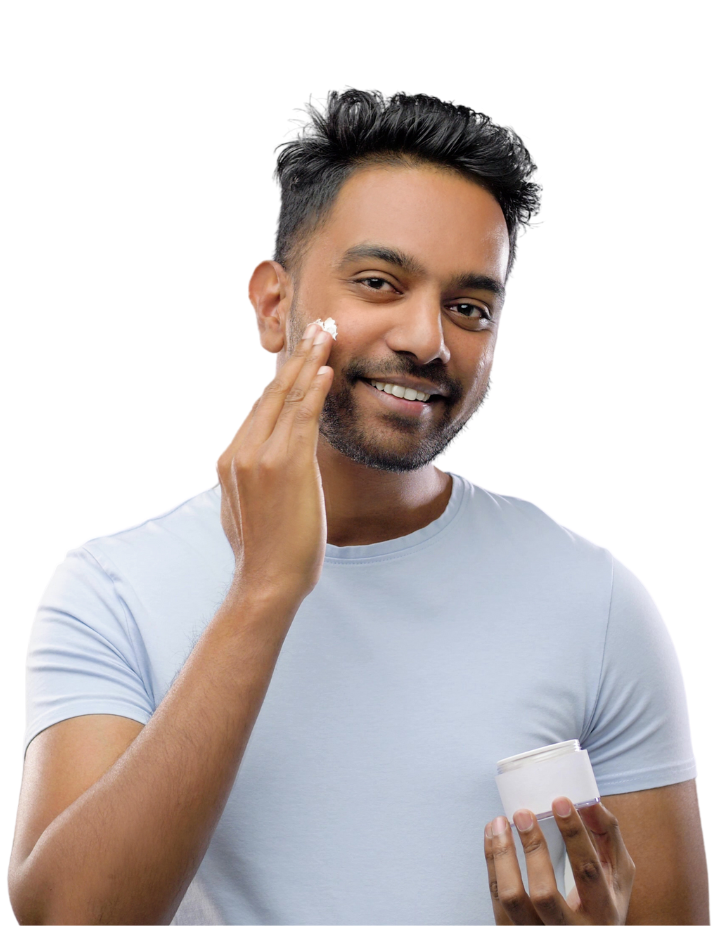
Let’s take another example: “This shampoo makes my hair soft.” This is a marketing claim because this type of sensory claim relates to subjective perceptions and the sensations a product provides.
It is based on consumers’ individual experiences, such as the feeling of softness in their hair after using the shampoo.
This statement aims to attract consumers by promising a sensory benefit. It is intended to influence perceptions of the product and encourage sales by highlighting a pleasant experience.
Unlike health or nutrition claims, which require scientific evidence and regulatory compliance, sensory claims such as “soft hair” do not require strict scientific validation. They are generally based on personal perceptions and can be used freely in marketing as long as they are not misleading.
Although less stringent than a formal claim requiring scientific evidence, the sensory claim and assertion tests conducted at Techni’Sens nevertheless follow a precise methodological framework in accordance with various standards.
What are the guidelines for the proper use of claims and statements?
Recommended methodology
There are many possible methods for justifying, claiming, or asserting something, such as descriptive tests or discriminative tests. When it comes to justifying an assessment or a preference, we refer to these as affective tests. To do this, it is necessary to conduct a consumer test on a representative sample of users.
Sample size
The sample size affects the accuracy of the results and, therefore, the credibility of the conclusions. Thus, in accordance with the General Guidelines for Conducting Hedonic Tests (which include consumer tests), referencing the NF V09-500 standard, at least 100 consumers must be surveyed. This sample size ensures that the results are statistically reliable.
ISO/DIS 20784
The ISO/DIS 20784 standard, for its part, provides recommendations regarding the substantiation of sensory claims and consumption claims.
Validation
A claim or assertion must meet a minimum threshold, namely 61% positive responses (binomial distribution) for a sample size of N=100.