


Techni’Sens at EuroSense 2026: when innovation redefines consumer research
There are events that are more than just a booth or a logo in a program. EuroSense is one of them. This leading European conference, dedicated to sensory analysis and consumer science, will be held this year from September 8 to 11, 2026, in Oslo, Norway. It brings together industry representatives, research institutes, researchers, and industry experts from around the world. The papers presented at the conference are selected by a scientific committee.
This year, Techni’Sens is presenting two posters at the event. These are two projects conducted with industry partners, Nuxe and MANE, two topics that appear very different on the surface but that, at their core, tell the same story: that of a research institute that is no longer content to simply measure what consumers say, but seeks to understand what they truly experience.

Why is participating in EuroSense 2026 important to us?
EuroSense is not like other trade shows. It is a scientific conference with high standards. Submitted abstracts undergo peer review before being accepted. The work must not only be substantively sound but also make a genuine contribution to the sector’s collective discourse. This year’s theme, “A Sense of Impact,” invites participants to demonstrate how their research has a tangible impact on societal and industrial challenges.
For Techni’Sens, being selected for two projects at the same time confirms a direction the company has been pursuing for several years: going beyond traditional methods, while never losing sight of the rigor that defines the value of a study.
Poster 1: AI and Consumer Photos
Objectively assessing cosmetic efficacy under real-world conditions
Cosmetic efficacy has long been measured in laboratories, under controlled conditions, far removed from real-world use. While this is useful for validating a formula, it is not always representative of what consumers experience at home, with their lighting, habits, and daily routines. The question Techni’Sens posed to Nuxe is simple to state but ambitious to solve: “How can we obtain objective efficacy data under real-world conditions?”.
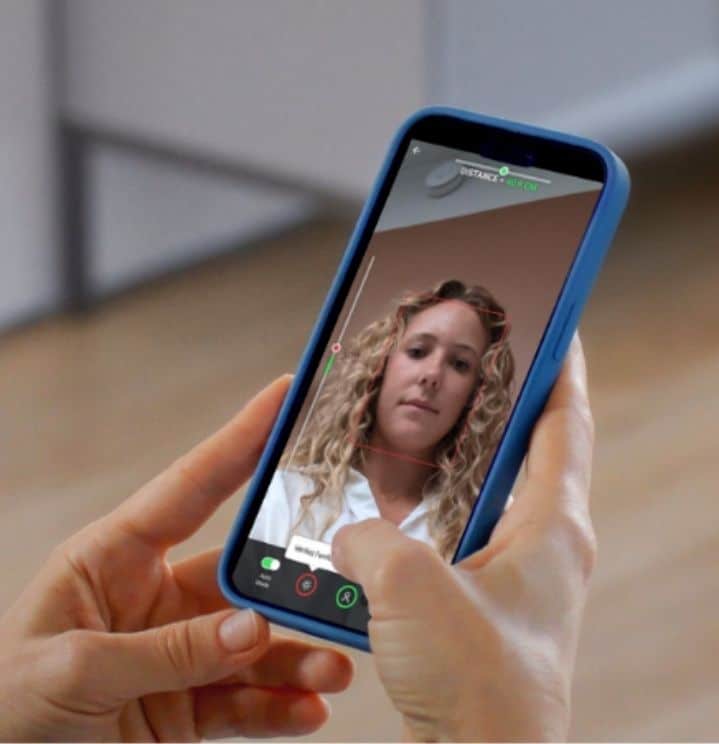
The solution combines four elements: a mobile app to guide photo-taking at home, automatic quality checks on the collected photos, an image analysis algorithm capable of extracting measurable data from these photos, and traditional consumer surveys to cross-reference objective data with self-reported perceptions.
What makes this approach interesting is precisely this interplay. AI does not replace the consumer; rather, it interprets what the human eye cannot always quantify in its natural environment. For cosmetics brands, this is a practical way to gain insights that more closely reflect the actual experience, without resorting to expensive equipment or restrictive protocols.
Poster 2: Soft Drinks & Emotions
Creating beverages that evoke emotions
Is it possible to design a beverage to evoke a specific emotion, and, more importantly, can that emotion be reliably measured? That is the question that Techni’Sens and MANE explored in this project.
Emotions are, by nature, subjective and difficult to capture. Traditional methods run into the same obstacles: social desirability bias, difficulty in verbalizing feelings, and the gap between what we actually feel and what we think we feel. The true contribution of this project is therefore methodological: Techni’Sens has developed new ways to capture emotions by circumventing these biases, combining implicit and explicit measures designed so that consumers do not have to “act out” an emotion, but simply experience it.
For manufacturers in the food and beverage industry, the challenge is clear: to better align a product’s sensory promise with the desired emotional effect, and to ensure that this effect is actually perceived by the target consumers.

What these two projects say about Techni’Sens
At first glance, cosmetic photography and emotions in beverages don’t have much in common. But they share the same goal: to go beyond what consumers say and capture what they’re actually experiencing. On one hand, AI is used to objectively analyze what the eye observes. On the other, new methods help us better understand what they’re feeling. Two approaches, one conviction. Consumer research has everything to gain by combining methodological expertise, technological innovation, and a close connection to real-world usage.
This is the evolution that Techni’Sens has been building for several years, project after project, by combining sensory analysis, qualitative approaches, and now artificial intelligence. This year, Eurosense 2026 validates this evolution within a recognized scientific framework. It is just one step among many, but it is a significant one.